
SHARE:


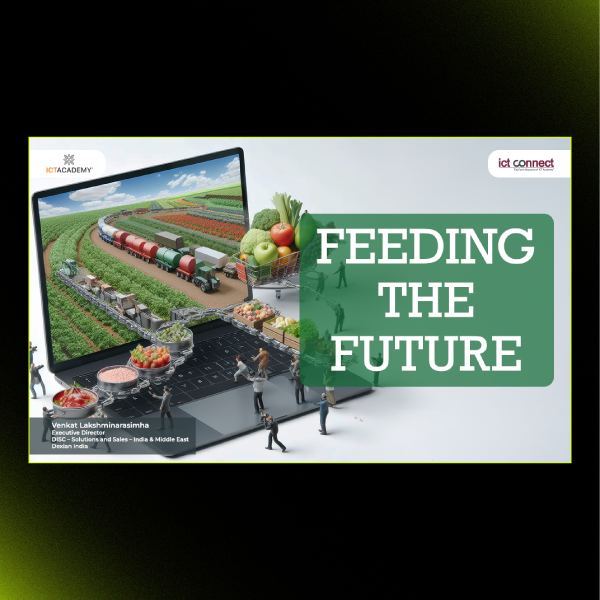
What if the farm of tomorrow is not just a patch of land but a smart ecosystem where soil, sensors, and satellites converse in real time? This is not a distant dream. AgriTech is rewriting the agricultural script, transforming supply chains and retail into engines of resilience, efficiency, and fairness.
India, the world’s largest producer of milk, pulses, and spices, still loses nearly 30 percent of perishable produce each year due to broken logistics and storage gaps. This loss translates into billions of dollars in wasted value, even as farmers remain squeezed between rising input costs and thin margins. The irony is glaring, but so is the opportunity. Could technology finally solve what decades of policy and subsidies could not?
Supply Chain: From Bottleneck to Value Chain
For decades, India’s agricultural supply chain has been a labyrinth. Multiple intermediaries stood between farmers and consumers, eroding value and increasing inefficiencies. But digital technology is redrawing this map.
This article was originally written by Venkat Lakshminarasimha, Executive Director – Solutions – India & Middle East at Dexian India, and first published by ICT Connect; shared here for informational purposes only, with full credit to the source.
Satellite monitoring, AI-driven weather predictions, IoT-enabled irrigation, and blockchain traceability are no longer buzzwords but practical tools. In fact, satellite-based farm advisory has already helped farmers increase their profitability by more than two to three times per acre, proving how data can convert uncertainty into confidence.
Digital marketplaces and traceability platforms play an equally critical role. The Open Network for Digital Commerce (ONDC) has begun enabling farmer-producer organizations to connect directly with retailers and buyers, bypassing layers of middlemen and ensuring better value. This isn’t just supply chain reform; it’s supply chain reinvention.
As Venkat Lakshminarasimha, Executive Director – Solutions – India & Middle East at Dexian India, observes, “India is entering a transformative era that can rightly be called the Digital Green Revolution. This movement leverages AI, IoT, and blockchain to enhance productivity, sustainability, and efficiency in farming.” His point underscores how connectivity and intelligence are becoming as vital to agriculture as seeds and soil.
Retail: Closing the Distance Between Farmer and Fork
Walk into any supermarket and you’ll see a paradox: produce that is overpriced for the consumer but underpaid to the farmer. AgriTech is collapsing this gap.
By embedding digital tools into procurement, grading, storage, and last-mile logistics, farmers now have a more direct link to retailers. Consumers, on the other hand, are increasingly demanding transparency — where was this rice grown, what practices were followed, how fresh is it really? Blockchain and digital traceability now allow a shopper to scan a QR code and see the story of their food from soil to shelf.
As Venkat highlights, “The fight against hunger is not just a challenge but an opportunity to redefine the relationship between humanity and nature. With the right technologies, we can create a world where food security is a given, not a privilege.” His words remind us that this retail transformation is not about convenience alone; it’s about dignity for farmers and confidence for consumers.
The Numbers Tell the Story
Global momentum in AgriTech is staggering. The global agriculture market is projected to grow from USD 15.5 trillion in 2025 to USD 20.6 trillion by 2029, at a CAGR of 7.4 percent. India is poised to be one of the biggest beneficiaries.
- The Indian AgriTech market, valued at USD 878 million in 2024, is expected to reach USD 6.1 billion by 2033.
- Broader AgriTech adoption could scale the sector from USD 3 billion in 2025 to USD 24 billion by 2030.
- Meanwhile, India’s agriculture sector itself, worth USD 580–650 billion in 2024, could grow to as high as USD 3.1 trillion by 2047 if supported by tech-enabled efficiency.
On the retail side, exports are another barometer of success. In April 2025 alone, India’s agricultural and processed food exports rose 15 percent year-on-year to ₹18,169 crore (USD 2.13 billion). Behind these numbers are smarter logistics, AI-enabled grading, and blockchain-based export certification.
Technology Meets Policy
Transformation does not occur in silos; it thrives where governance and innovation align. Maharashtra’s newly launched MahaAgri-AI Policy (2025–29) earmarks ₹500 crore to deploy AI, drones, sensors, and blockchain for predictive monitoring and crop traceability. This kind of policy support ensures AgriTech scales beyond pilot projects into national infrastructure.
Equally significant is the penetration of mobile apps. By 2025, over 60 percent of Indian farmers are expected to use digital platforms for weather forecasts, market pricing, and crop advisories. Smart irrigation adoption has also jumped, covering more than 60 percent of irrigated lands, compared to 50 percent just a few years ago.
The public-private-technology triad is no longer a theoretical framework. It’s a working reality that is reshaping rural India field by field.
The Human Side of the Transformation
Numbers and policies aside, the most profound impact is on human lives. For farmers, technology reduces guesswork, lowers costs, and secures fairer prices. For consumers, it ensures fresher produce, healthier options, and confidence in their food choices. For retailers, it unlocks resilient, responsive supply chains that can weather climate shocks and demand fluctuations.
AgriTech is not replacing the farmer. It empowers farmers to become data-driven entrepreneurs. Isn’t that the ultimate transformation, turning agriculture from a subsistence to an enterprise?
Venkat frames it poignantly: “The future of agriculture will not be measured only in yields or profits, but in how equitably it nourishes people and sustains the planet.” His words capture the moral compass of AgriTech: growth with responsibility.
Looking Ahead
So where do we go from here?
- Scaling digital marketplaces could eliminate inefficiencies and bring millions of farmers into organized retail.
- Cold chain innovation powered by AI and IoT can reduce India’s post-harvest losses, currently among the highest in the world.
- Export competitiveness will rise as traceability systems match global quality demands.
- Climate resilience through predictive analytics and precision farming will safeguard yields against unpredictable weather.
If executed with purpose, India could evolve from being a food-secure nation to a food-export powerhouse, influencing global agricultural trade flows.
A Gentle Call to Reflection
Pause for a moment. The next time you savor a cup of tea, bite into a mango, or cook a bowl of rice, think of the invisible web of satellites, sensors, farmers, and digital platforms that made that possible. Agriculture is no longer a story of toil alone; it is a story of intelligence, resilience, and ambition.
AgriTech is not about gadgets in the field. It’s about rewriting the relationship between soil and society, farmer and consumer, local harvest and global markets. From soil to shelf, it is quietly but powerfully transforming how the world eats.
SHARE:
